[00:00:00] Speaker A: I said this after the award as well, that the excitement of this money is for R and D, right? We want to make new products, we want to do more with it. And I think that's how we've operated the business. Like we need to be practical and not overextend ourselves or go beyond what we have in front of us in terms of liquidity, cash, like how we run the business. But the more we can invest in making new products, technologies and consumer experiences, the better off we would be with it.
[00:00:24] Speaker B: Welcome to the B2B Breakthrough Podcast. We're here to bring you all the best knowledge, insights and strategies from e commerce experts, successful business owners, and the
[email protected] that you'll need to grow your business and achieve your next big breakthrough. I'm your host, Ciara Christo.
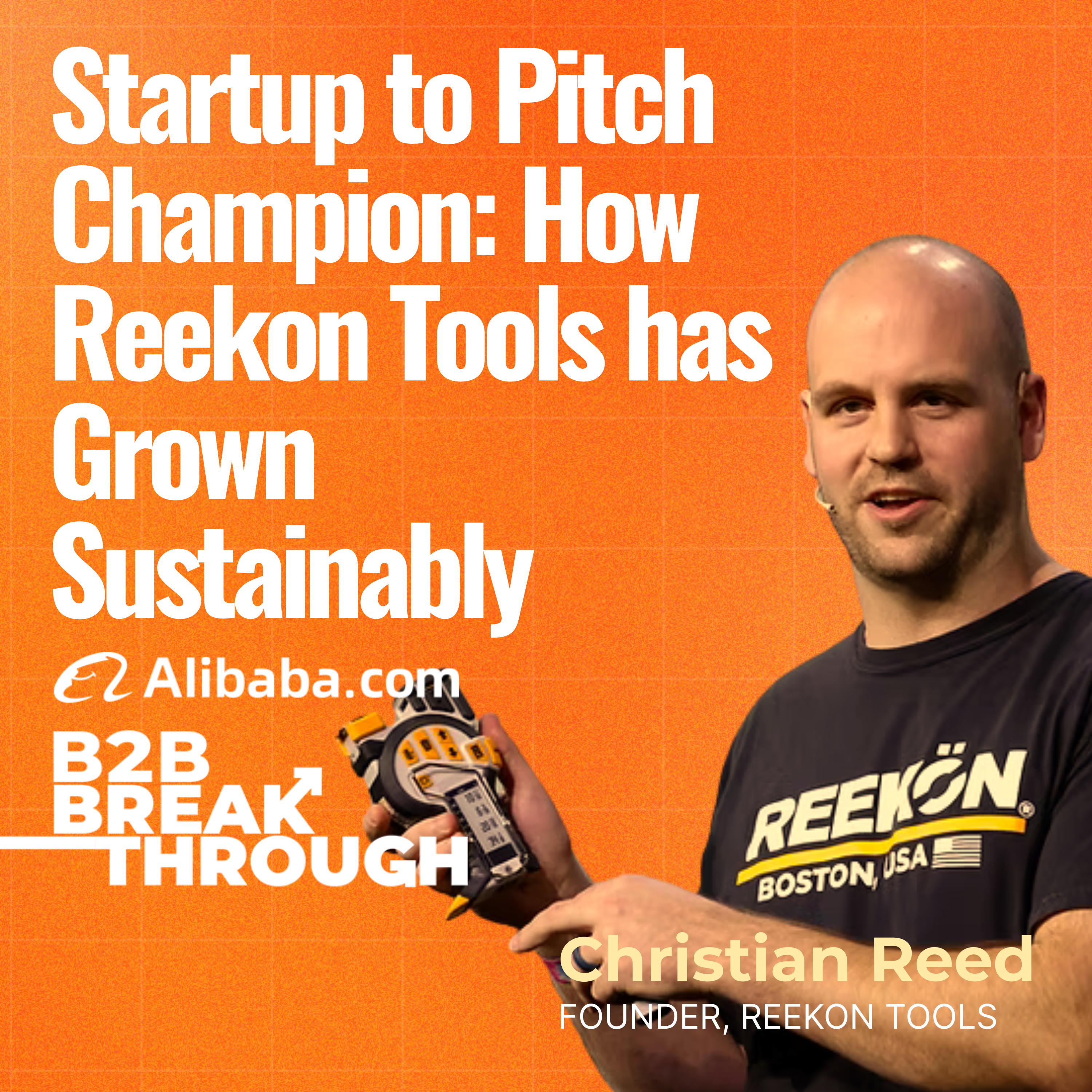
Today on B2B Breakthrough, I'm joined by Christian Reed, the founder of Recon Tools and fresh off his big win at Co Create pitch. Christian has built an innovative hardware brand without leaning on traditional VC funding. And he's here to share the ups, downs and lessons that other entrepreneurs can learn from. Christian, welcome to the show. We're glad you're here.
[00:00:58] Speaker A: Thanks for having me. Happy to be here.
[00:01:00] Speaker B: Congratulations again on your big win at Co Create. How's the response been for the team?
[00:01:04] Speaker A: Great. I think it's anytime there's a way to validate the work we're doing that anytime we're engineering or internal to something, you certainly deal with all the pits and behind the scenes, whereas the customers only see the final product with it.
[00:01:17] Speaker B: For our listeners who were not at Co Create and who may not be familiar with you, can you lay a quick foundation for us on what Recon is?
[00:01:24] Speaker A: Yeah, sure. So Recon Tools was founded by myself and my co founder Costas, in 2020, really, as a side project, we had launched a Kickstarter for a very specific measuring tool for miter saws that basically just measures wood slid underneath a rolling wheel and displaying the measurement of it. And I think five years later and hundreds of thousands of products later, we've developed a lot more of a robust idea of what recon could become and is becoming now, which is a way to capture and execute data on everything from large construction projects to home improvement projects.
Digital tape measures are probably the best personification of that of taking a standard tape measure, making it digital to both display the measurement and having Bluetooth to be able to share the measurements. Any spreadsheet, PDF software, or ways to really integrate and digitize construction projects so that's been our theme over the past couple of years. And constantly innovating and working on new ways we can help professionals in the space complete their work faster with less errors and make it easier for someone to come in and get active working on a project.
[00:02:27] Speaker B: It's so cool. And I remember, you know, watching your pitch and listening to your pitch backstage and seeing the way that you were able to engage the judges. So you presented the tape measure at Co Create, is that right?
[00:02:37] Speaker A: Yes.
[00:02:38] Speaker B: Yeah. What was that impetus for you to create these tools? What kind of sparked that inspiration?
[00:02:43] Speaker A: Yeah, I think mine and my co founder's passion has always been for making things in general. And I think that takes different forms, of course, depending on where you are in your life. Prior starting Recon, I worked at a 3D printing company where we made desktop 3D printers called Formlabs. So I think the idea of enabling people to make something that other ways they wouldn't have been able to, would have been too expensive or too difficult to do is really the message instilled and resonated over what our passion always was. And I think that channeled into what we could do at Recon, which is take something that we perceived as being slow, inefficient, and largely unchanged. So the idea of taking something so elemental and making it just off the bat, seem like it has more technology with a screen on it. And then the gift that keeps giving of, hey, instead of now having to type this into an order form for a new window or a project I'm doing, I just click the save button and it appears in my notepad on my iPhone, my spreadsheet on the computer, or anywhere else in between with it. And it's a very low barrier to shift from using a normal tape measure to a digital tape measure and reap all the benefits that it provides.
[00:03:45] Speaker B: Totally. And what's really impressive to me is that it's not just, you know, uploading data into a native app that's specific to Recon. Right. You're saying it does populate in spreadsheets or in other forms that you're using already, so. So there's a really seamless integration into your life.
[00:04:01] Speaker A: Yeah. So I think that's the cool part of it. And something we found out midway through that software flexibility was a really important aspect of it. So we certainly have our own software to give people an opening argument, but it's very flexible and can actually just emulate a keyboard. So anything you can connect a keyboard to over Bluetooth, you can connect our tape Measure to and it will literally just type out what's on the screen in a spreadsheet, cell, a Word document, a browser, anything in between with it. So I think this flexibility has really given way to the inspirational side of, of now that I have it, what can I do with it? And that's where we see the really cool applications of what people are doing and using with them.
[00:04:37] Speaker B: You were saying that you started this company while you were working for this desktop 3D printing company. How did you manage that side hustle element, you know, while you were maintaining a job? And what kind of was that turning point for you that said this is going to work and it deserves all of my time?
[00:04:53] Speaker A: Yeah. So I think two parts, one always being my passion, like this is my hobby is making things. So for me to work a full time job and then go home and work on something else, it was an not the I think represented or manifested as like working 80 hours a week, two full time jobs. It was, you know, working my passion, my normal job making 3D printers and continuing my passion after work making a side product that eventually turned into Recon tools with it. So I think that was the first part of it and then the second of what pushed me over the edge of doing it was Kickstarter. So Kickstarter, this is all during COVID So again, certainly time had a different way of presenting itself during the 2020 period when we started Recon with COVID and everything going on. But yeah, launched a Kickstarter and we were really treating it as a side project. We weren't intending like we're going to quit our jobs and do it. We were like, hey, this will be a fun side project. Let's see what happens and then we can decide where we want to go from there with it. But we launched it in June of 2020. It took off, I think we did $1.2 million on Kickstarter. And then you start to raise a question of like why wouldn't I quit my job and do this full time? It's something that's mine. The ability for it to grow and evolve over time with it was fully on us to have to figure out and define with it. So I think that's when it became a lot. And that's when I gave my resignation to formlabs and then haven't looked back since. Almost five years later now.
[00:06:12] Speaker B: And now you're. You're fully self sustained, is that right?
[00:06:14] Speaker A: Yep, fully self sustained. So I think that was a important one. And again, nothing wrong with venture capital. Funding. But for us, the added flexibility we get and you know, for me, inevitability is right. Companies do need to be profitable, they do need to make money. And venture capital sometimes changes the time horizons of how and when that needs to happen. With it, we want to make new products, we want to do more with it, and I think that's how we've operated the business. The more we can invest in making new products, technologies and consumer experiences, the better off we would be with it. So always trying to maintain that balance of making it work today and then investing in the future tomorrow between products, technologies and things that we're able to serve our customers better with.
[00:06:54] Speaker B: You're so clear about where it all is going and it's so, you know, I mean, it's a necessity to maintain your business and to keep everything, you know, all the wheels greased. But it's really cool hearing you talk about it with so much passion and knowing you know exactly where the business is headed. I want to come back to that in a minute, but you know, first I want to talk a little bit more about the Kickstarter influence at the beginning of this company. I think there's something really inspirational about the format of Kickstarter where you have this ongoing and active conversation with your backers. Can you talk to me a little bit about how that experience and the, you know, the input from folks from the backers side has helped to establish a strong customer base for you?
[00:07:37] Speaker A: Yeah, it's one of the many things in business that I don't think you fully appreciate or realize. In retrospect, to me, having done a much smaller Kickstarter for a little multi tool I had made in 2016, I was generally familiar with how the platform worked and just the overall concept of you can start a hardware, a business that is capital intensive, you're going to have to manufacture something, both the tooling as well as the inventory for it. And here's a way to get an amount of money to subsidize that experience to get lunched and then hopefully sustain the flywheel when you go live post shipping on Amazon, Home Depot, whatever.
So I think, you know, that was the, the driving force of what brought us to Kickstarter in the first place. And then we're, you know, pleasantly surprised of just the community that, you know, having sold many products since then, both on Kickstarter and off of Kickstarter, that Kickstarter backers are some of the most loyal, long lifetime backers of the customer and just have that purpose of being involved in the process, because we're posting updates every couple weeks, once a month, people know exactly what's happening, the struggles you're going through with what's happening, with the tooling. And I think it really gave character to something that is normally just kind of notional big economy doing things that I don't understand is something that's actually happening, justified and quantified in a way that otherwise is too abstract to comprehend or really want to deal with. So I think that's been both surprising and impactful of having that community of champions, the ones who are going to bat for us buying our new products, battling the social media trolls in the comments of questioning who we are, our characters.
[00:09:08] Speaker B: You made a really good point. I mean, supply chain shortages really feel like this abstract concept. And so once you actually feel that impact, it really helps to have a greater appreciation for the products in your life and the small business owners behind them. And I think that communication and that open relationship that you have with your backers is really, it's so special. Has there been any feedback that you've received in those campaigns from your audience that has helped you, has helped propel you forward, or think of new directions to take certain products? What has that conversation been like? Is there anything like that in your history?
[00:09:43] Speaker A: Yeah, I think both directly and indirectly, that indirectly, a lot of the Kickstarter backers are the ones who, when we do solicit either user feedback, beta testers, they're the first ones to raise their hands and not only notionally do it to say they did it, but actually provide feedback, hop on a call with us for a half hour, type up a two page word document of their experiences with it. So it's been great impactful to both validate assumptions we've had as well as make sure we're staying in line with the reality of the customer base and products we're serving. And an example of that is when we launched our digital tape measure on a Kickstarter campaign. We had English blades which have inches printed on the tape measure itself, and a metric blade which has metric units on it. And we presented those both to our campaign backers and they're like, hey, what about a split plate for all of us in the uk, Canada, Australia, Commonwealth territories that use both units? That's the standard here to have split with it. And we were initially, we had heard of it before, we're like, no one probably wants that. And then we had, literally, I think, I don't know, somewhere like 20 or 30% of the people actually Wound up wanting that blade with it. So that was something where the community spoke up. We got their feedback on it and wasn't just, you know, us sitting in our offices launching a product and hoping it works out of getting that closed loop feedback and was well in advance enough where it wasn't that impactful for us to have to make that as a separate SKU and provide that to customers with it. So I think that was one of the ones I always remember and recall and use as examples when we briefed the team on launching a new one of how impactful that feedback can be and how that can feed directly into the product development process prior to actually launching it and shipping it to customers.
[00:11:17] Speaker B: That's such a cool, tangible example. And just knowing that the distribution method is also your built in research system. So that's, that's a very helpful example for folks considering taking on a Kickstarter campaign to continue to expand their businesses. And it sounds like it's still something that you are involved in. You're still using it as a platform even five years in and continuing to expand. How is it helping you now that you have an established brand behind your products? How is Kickstarter? How has that changed for you? How has the process changed?
[00:11:51] Speaker A: It's really cool because I think a lot of people view it as just a place to lunch and then never think about it again. Where for us it's had a very large impact on a continuing annual basis for creating hype around a lunch. Right. It's just a huge way for people love to see that number climb up the number of backers and feel part of something with it. So I think that's been a big one and two. One of the challenges that we face as a bootstrap business is just cash flow management, which I think any hardware company does. So the idea of getting something subsidized to build the development for, build up an initial inventory for is infinitely better. Regardless of growing as a business, it's always best practice in my opinion of the idea of just get it shipped out the door as quickly as possible with it. You never want to stall or wait for something or try to assume things with it. So this just helps keep the velocity going. Getting feedback earlier on in the process and from an operational perspective, a way to help better manage cash flow for us to continue to take on ambitious projects without potentially hamstring or detracting away from R and D or other initiatives we have going on another place that, that, you know, capital we're getting from existing sales could be go to or leveraged in the overall process.
[00:12:56] Speaker B: Yeah, I mean and it sounds like you've expanded quite a bit in this time, you know, since you've launched your first campaign.
So you know, this is clearly not just you and your co founder anymore. How has your team expanded over the years?
[00:13:06] Speaker A: So we're about 15 full time people now and I think it was very much correlated with each progressive Kickstarter we did for at least the first two of them was, you know, we launched the first Kickstarter, it's like, all right now let's hire an engineer and a operational coordinator. We launched our second campaign. All right now let's expand that to a full time design a full time new product introduction, lead to work with the factory and so on with it. So I think each campaign is correlated to us expanding and growing the business, diversifying our product line and revenue streams. And each of those has culminated with growing the team now to 15 full time people that work with us here in Boston across engineering, operations, design, marketing, to make the machine go and really now tell the story of our cohesive brand and get it into the hands of customers who we have now validation that it actually hits these benefits that we've been advertising and just always ear to the ground trying to make things better, improvements take into the feedback and make the products better. So all that's been really cool journey and great way for us to build this high power team that just has such a systematic ability to produce these products, technologies and other aspects needed to continue to grow the business.
[00:14:16] Speaker B: Well, it sounds like you've each of those expansions have been so intentional, so deliberate. How has that helped you maintain your profitability? As you mentioned, as you're scaling, I think scaling can be such a daunting concept. You know, how do we maintain this sustainability as a brand while we're bringing on new people? Have you come across any challenges with that process as you've been expanding?
[00:14:40] Speaker A: Yeah, it's really difficult. There's no doubt about it. And it's never, I think a lot of people, entrepreneurs in general are, it's very tempted in human nature to say when I reach this point everything is going to be better or different. And that point never happens. You can look back in retrospect and sometimes highlight better infliction points or when things change with it. But I think that's been the case here with it that as things grow, some things get easier, other things get harder and very often new things pop up that you would have never imagined before with it. So Each year has had brought its own set of challenges that for us rather than, you know, use as an excuse, it's just like, all right, we'll figure out a way to deal with it. And again, different levels of pain associated with all those items and the solutions for them with it. But I think as with any startup, we try to remain agile on our feet to navigate them with it and there's never a clear and easy pathway and have still been eluded or rather that elusive culmination of like oh, once we reach this point, everything's going to be smooth sailing. We're going to be on vacation for half the week. Working remotely just never happens. There's always a challenge to overcome with it and I think that it's just shifted around. As we've grown the business more so than gotten easier, just shifts to different aspects or new things pop up that other ways wouldn't have at a smaller scale inside anything from just when we started the company, we had one product to worry about. So everything was focused on that product, the website, the marketing and now we have multiple products. How do we hype up a product for pre order and sell our existing products simultaneously as well? And obviously there are ways to do that, but it becomes a lot more complicated on how to manage a portfolio of products, initiatives and things more so than it was to devote all of our energy and attention to a single action at a time with it.
[00:16:17] Speaker B: I mean five years is no time at all to scale to the heights that you have. It's really remarkable.
[00:16:22] Speaker A: Flies by. Yeah, definitely flies by.
[00:16:25] Speaker B: Yeah.
Is the complexity of sourcing holding you back? Are you getting overwhelmed by information in an endless search? Now, sourcing for your business has never been easier. Meet Axio, the world's first AI sourcing engine that helps you source like a pro. With five key features, you'll get product inspiration that leverages real time market data from comprehensive web insights, social media Trends and beats B2B knowledge. Generate detailed requirements to find the perfect match from AI verified products and suppliers through Axio's multimodal search. Use Super Comparison to easily discover and compare millions of products from leading suppliers, focusing on the best selling and most competitive options. With Axio Page, you'll get AI generated encyclopedia pages that compile verified product information for each sku and finally leverage Axio Agent to streamline negotiations with conversation guidance, real time summaries and direct answers about products and suppliers without having to browse detail pages. Head over to Axio AI today that's Accio AI to try Axio for free and start sourcing like a pro.
Now I want to come back to what you mentioned earlier about how the co create pitch has helped fuel some funding for R and D. How are you managing this new influx of cash? Will that help you to focus your energy on moving forward?
[00:17:47] Speaker A: Yeah, there's always, especially even before we start Recon, you always have a notebook, digital, whatever of like these are ideas I want to do with it. And I think at Recon now five years in, we have more so than I think we've been very fortunate of. Like anything we've researched has never been a graveyard of like this is a dead end. There's more very often, if not all the time of something that doesn't make sense right now because of the cost of doing it, because of the technology is not quite there with it. But now five years into it, not only do we have that as a portfolio, some technology has improved, some new things exist that otherwise wouldn't have been possible between AI and other areas of the software side of it. So I think this outside of just more generally being related to more R and D initiatives is really focused on the idea that we have this backlog of things that we validated. We know there's a market for, we now know that technology is there for with it and now we have the funding ability to research more ambitious things that other ways if we had followed the normal progression probably would have happened but maybe three to five years down the road with it. So I think this allows us to really pull in a couple of those from a combination. Right. The research that we need to do, sometimes we need either equipment to instrument something or figure something out internally as it's not an existing technology of something we have to develop with it. Other times there'll be personnel or some expertise we need to do for one aspect of the project.
Other times it could be supplier development where it exists in a lab, but it's not something that we could make 100,000 of a year with it. So I think all these are areas that we're exploring with a couple of the new products which again may have been on the roadmap in the very distant future that now we're able to front load quite a bit more with it and able to take into the process. And there are areas like, well, we just don't have the time ability or resources now to do it. That we can execute on it I think is a really exciting aspect just because we know there's demand for it, we know there's need for it. We know it's going to make people lives easier, but it doesn't exist until it's something that we can make and be able to ship to these customers wherever.
[00:19:46] Speaker B: Do you have, you know, consistent relationships with suppliers to keep things all in one place, all under one roof or are you diversifying a little bit? Can you talk to me a little bit about those relationships?
[00:19:57] Speaker A: Relationships are what drive manufacturing and you always get. I just asked a question a couple hours ago of like how do you find a vendor for X, Y and Z? And you know, it usually follows the same formula, right of a combination of networking, going to Alibaba to start the search that there are a lot of components or sub assemblies that we of course prefer to maintain relationships and centralize things. And sometimes that's possible, sometimes that's not. And other times there's something so new or cutting edge relative to you or relative to the industry that you have to go out and find someone who can do it. So I think that's a big aspect of what we try to do. And for everything we have publicly facing of products marketing we do, there's a huge amount of infrastructure we developed both operationally of just how things move around, but also the technology. We have a full custom built software package that runs our factory platform with it we have dozens of custom built factory calibration tools, jigs, fixtures, which is a lot of the secret sauce behind the scenes of have a very low cost, useful, impactful product by calibrating out inefficiencies at the factory with it. And I think that's something we don't advertise as much. And there's a lot of course trade secrets mixed in with the exact nature of what they do with it. But I think a huge part of what we do and how we do it is because of all this factory infrastructure that we've built up and chipped away with over the time, which in a isolation can feel thankless because it's something that you're working at behind the scenes. But not only does it help making new products, but one of the parallels we always use is that you're still serving a customer and that's a factory worker. A factory worker needs to be able to use this setup reliably, well, consistently well over the course of hundreds of thousands of products made with it. So it's still the same experience we're designing for, just for a different customer end user with it.
[00:21:40] Speaker B: It's an interesting perspective. I haven't heard very much about folks who have independently created this Infrastructures and systems that have help maintain standards of quality and consistency within the manufacturer's realm. So have they had much impact on some of the, either the infrastructure optimizations or the product optimizations themselves. Has that relationship have any tangible impact on the business that you've built with your team?
[00:22:08] Speaker A: Yeah, I think because everything is a collaboration, nothing is ever done in isolation. So you could have the best thing in the world, but if you don't have the buy in from your partner on it, whether how they use it doesn't work with their system. So we want to pull data out of it, they want to pull data out of it as well. So it's very much like any relationship, a collaboration and those are the best partnerships or ones that are very much on the same page. And I think that plays a big part of making these systems, whether they're calibration equipment, general handshake agreements. Assembly is just knowing how to communicate, how to get the information back and forth with it and really achieve the joint goal, which is shipping products. That's where everyone wins and what we're all striving for with it. But that's certainly a relationship more so than just like, hey, do this, let me know when it's done. That never works out and always winds up with problems on the back end.
[00:22:54] Speaker B: Yeah. Do you have an example of a moment where you kind of realize that these are my people, this is the factory, this is the team that's going to take my product over the finish line? Is there any that epiphany moment that, that you realized this is going to work with these, this particular team?
[00:23:11] Speaker A: Yeah, it always happens when something's on fire.
You do the best vetting you can ahead of time with it, but at some point you're, you know, putting trust in one another that it'll work out. But think the real culmination of when it happens is when something's on fire. A part doesn't fit, a vendor doesn't work out. And I think with our current manufacturer that was highlighted most where a product wasn't quite working out. There was a very high yield loss of a part that was being molded with a very specialized process with it. They had picked the vendor, they had vetted them with it and rather than do what is say more typical of like either throw their hands up and be like, hey, figure it out or hey, we're going to charge you. Do X amount more with it, is that they held their words like, hey, this is our vendor, this is our mistake. This is something we'll live up to with it. And while a small and relatively low cost part in the overall sense of things, I think that philosophy goes a long way because of just how much we invest into it. We had full time engineers there for months at a time to get the product ready. We were clearly passionate, energetic about doing it, but really sharing then in the process of getting to that end position. And it's not a matter of assigning blame or figuring out who's wrong with it, but there's definitely some responsibility that needs to be claimed for decisions made in the process. And I think it really went a long way that they had accepted that for it. And not only the cost side of it, but also the timeline, the, you know, making it work with it and then ultimately improving the process is something that's sustainable for making, you know, tens of thousands of a part with it. So I think that was for our current manufacture, current primary, we have plenty of sub suppliers, but our main contract manufacturer that's doing final assembly and a lot of the moldings of the products. I think that was a pretty pivotal moment in an early relationship and one that, you know, validated our initial thoughts of what went with them, is that they held their word, it was a good relationship and I think what allows us to continue to moving forward together so well.
[00:24:57] Speaker B: I mean that's huge green flag, huge green flag that they're able to roll with the punches and be accountable for something like that. I mean, you hope that you don't end up in a situation where you need to put out that fire. But it happens in every business. It happens everywhere. So how do you even find that supplier in the first place? I mean it's, it's clear that that fire was what showed you that you made the right choice. But what is something that you look for when you're doing that initial vetting process that says this is someone to gamble on? Because it is a bit of a gamble at the beginning to decide who you're going to partner with.
[00:25:33] Speaker A: Yeah. So I think it's very similar to get an investment. And I think a lot of people think of it more transactional of like, oh, I'm going to find someone to make the product where to me it's much more investment like, like you have to, to. Not only do they have to convince you that they're the right manufacturer, you have to convince them that you're a good partner, you have a reasonable business and it's going to grow because very practically speaking, a manufacturer shouldn't want to work with A startup, right, that's very risk prone. They haven't maybe gone through the process before with it. So it's always a blessing when we find someone to work with us because it is a very risk prone operation from both sides of things with it. So the first part I think is selling yourself on the vision and do they get it? Do they understand where it's going and can they use that to help level up a little bit? And that's, I think with all of our manufacturers we always try to go one step above. We're not trying on day one to go to Foxconn, but you know, if we're doing whatever $2 million of business, you want to go to someone who generally works with people doing 5 or 10 million dollars of business per account, whatever with it. So you're slightly leveling up. So know that you can grow and scale with them and you know that they can handle the larger operational requirement rather than something that if a product takes off you have to scramble around because they have no experience being able to build that many products or units in a given time with it. So I think that's one big aspect. And then the second one that we see very often is like, are they good at making new products? Like some are very strictly manufacturers where if you bring them a line, they can make it. Whether it's a line transfer and expansion, they can do that very well. But NPIs new product introductions from scratch have a lot different set of skills between engineering and dealing with the inevitable fires that come up. Right. If you've made a million of something, it's going to be a lot more predictable as to what to expect than if you're making something radically new. And how well does it align with their business? Are you going to a manufacturer of clothing and asking them to make a electronic whatever with it scooter? So making sure there's someone that it may not be in a direct wheelhouse and a lot of times for us they're not a ton of tape measure, digital tape measure manufacturers in the world. But making sure they have that similar level of consumer electronic experience and launching new to world products I think has always been something big that we look for in addition to the overall relationship style of working and making sure that we both have the ability to expand and grow with one another as the business changes over time. Time.
[00:27:48] Speaker B: Those are some great parameters and it's, it's, those aren't ones that I hear all that frequently. You know, we always talk about how it's so important to build A relationship to have those conversations and ask the important questions, but something like, are you going to have the capacity to scale with me and support me in that process? That's something that's, you know, it takes a certain level of optimism and faith in your brand to make that call. To say, like, I know that we're going to exceed where we are right now and I want you to be along for that ride. So I think that's a really cool perspective. And to know how to look for those traits in a partner is a really helpful starting point for someone just getting into launching a new product or starting a brand.
[00:28:28] Speaker A: Absolutely. I think it's a lot of people have a very notional. We had the benefit of going through a lot of the manufacturing process when we worked at Form Labs, which I call my subsidized secondary education after college. So it was a great way to learn the ropes. But there's a lot that I appreciate. So I won't say we take for granted, but for the average person coming in, there's a lot of things you can notionally say, like, oh, notionally I find someone to injection mold my products or notionally I get someone to assemble it. And there's so much, and to this day, 15 years into making products, that there's no depth of how much you have to learn about how to manufacture a product and what to do with it. And I think that's always really humbling of just seeing how little you know and how much more there is, both in terms of like fires or problems you could have, but also just the intricacies of making a product or manufacturing something with it. So that's something we're always keeping a swivel on of how do we learn more about with it. And at this point, well versed that there's always some level of uncertainty in any project we do and try to account for that as best we can to make it practical to get through all the way to the finish line.
[00:29:31] Speaker B: Yeah, you don't know what you don't know and it's gonna sneak up on you.
[00:29:34] Speaker A: Yeah.
[00:29:36] Speaker B: What is a lesson that you wish someone had taught you earlier on in the process of starting recon?
[00:29:43] Speaker A: Yeah, there's no shortage of things. I think the one that's most impactful right now that for. I don't know if this is true for every business or industry, but something that I think hits everyone at some point.
I think a lot of times people prioritize revenue than profitability, where I think cash flow is probably at the top of the list of most important things to deal with that the biggest challenges we have are not are we going to make money? It's when do we make money? When do we have to pay something? When do we have the money in our account with it? And it's one of those things again, that again, this differs for many people and obviously knew what cash flow was, that heard of it before, had probably done something on it in school, I'm sure at various points. But the real impact of when you receive money and when money goes out has a huge and very, very painful operationally of in your head, you're just like, oh, you make money. It goes in your account. Where Amazon takes two weeks to get the payment, shopify a couple days retail account, 30 to 60 days with it. So you really start to map out the time. I make my first payment to a manufacturer's house and it's never been at the point of like, oh, we're in trouble. Like, we have product market fit, we have this. But you know, even for the Black Friday holiday, if we're stocking up on a ton of inventory, that money has to come from somewhere until we flip it to sold units in late November through December and then, you know, we'll receive the money for that in late December, January. So something that's less. I don't know if it's glorious or intuitive as like revenue or profitability. That cash flow certainly plays a big part in it that you can't look at things on a yearly basis like really month to month and sometimes even week to week. It will play an impact on operationally how to keep everything running smoothly and you know, the flow of goods in and out going as expected.
[00:31:26] Speaker B: Yeah, it's a lot more nuanced than I think most consumers have any have any concept of to manage all of that. And you mentioned a few different e commerce sites that you're selling on. So across all of your products, where are you selling to the end consumer.
[00:31:40] Speaker A: Most directly through our own website along with Amazon are probably the closest, at least in the US D2C or consumer websites. We sell on Home Depot on the industrial side, Granger McMaster, car with it. So we try to be where our consumers are and we're not. I think a lot of a mistake early founders make is chasing headlines or titles of like where they're selling. And for us, we've taken a lot more disciplined approach about vetting. We have a long list and backlog of people who want to sell recon products. But for us to maintain Minimum advertised pricing, the MSRP and provide people with a good and supported experience is that we've been very deliberate about retail and channel partners that convey the products can maintain the pricing, inventory, replacement parts and everything else needed as part of the process with it.
[00:32:24] Speaker B: It's so smart to keep it tight because it can get so unwieldy, especially if you're dealing with a backlog of retailers. So where are we headed in the future? I know we're coming up on time here. I want to think five years down the road. Can you talk to me a little bit about how you anticipate recon expanding?
[00:32:39] Speaker A: Yeah, I think in the five year horizon, of course it's hard to get granular as to what the exact products will be with it. But at a very macro level, the same that, you know, every professional today in the, you know, trades contractor, construction worker has a battery platform, right. I use Milwaukee tools, I use Dewalt tools. Our idea and vision is that they'll have a data or measurement platform as well, which presumably Recon, which is a combination of physical tools and software to just make the process easier of collecting data on a job site with it. So whether that's a combination of using your phone or iPad or again the very elusive, you know, virtual reality augmented reality, like if everyone five years from now had a pair of meta Ray Bans or whatever the latest and greatest technology was, that's not like an Oculus headset that covered goggles, but just like casual looking sunglasses, Ray Ban wayfarers, whatever the case may be from Oakley or whoever, if you can make that mainstream. I think there are a lot of really interesting possibilities of just taking what are traditionally paper processes of writing down measurements, drawing a little sketch of opening or doorway. I'm doing with it using the text messages WhatsApp on my phone to to tell someone who's at the store on the roof of a job site what they need to do with it, of making that a very streamlined experience.
So when we look five years out, I think it's a combination of building for, in our sense, an inevitability. I don't know if that'll be in five years or 10 years, but making sure we have the digital infrastructure to capture data from the physical environment, which there always will be a place for. With it we're building up the software and hardware infrastructure to accept that reality and be as flexible as possible to take advantage of whatever the latest and greatest is to go on with it. The emergent tech technologies of AI machine learning to the Physical devices of vrar and kind of everything in between with it, but all with the same purpose of just helping people make things faster, better with less errors, and also just lowering the barrier of entry that there's still and always talked about a labor shortage, people not getting into the trade. So undoubtedly America and Beyond's ambition to make buildings will continue.
[00:34:44] Speaker B: I'm really excited to see how this will continue to expand and integrate. One last thing I want to ask you. This conversation started talking about your pitch at Co Create, and I want to come full circle here and share some advice with folks pitching their businesses moving forward. What advice do you give to a product creator who is looking for investments and actively pitching? What is some words of motivation that you would. You would offer them?
[00:35:08] Speaker A: Passion is certainly one thing. And I tell people, you know, I think people have different sensitivities to pitching. Like, for me, it's like, I love talking about recon. The only thing I do is talk about recon. So it's not something that I think needed a lot of practice because it's something I live. My whole life just revolves around it. And I think some people. People view that as a negative thing. Where for me, this is my hobby, this is my passion, this is my excitement, and able to integrate everything else in my life, from working out to family time, it all fits in and has a role with a more structured schedule. And then when it gets time to pitch something, it was really the biggest preparation I need to do is just kind of focus of how do I. I have 90 seconds. How do I consolidate the aspects of what the judges are looking for, what the Criteria is in 90 seconds, more so than, like, what do I talk about in a general sense with it? So, you know, pitching has its own sense of dynamics, of, like, how to pitch something, tell a story, be exciting. But I think passion is what drives it. Like, it's very hard to have something you're loosely interested in and do well, regardless if it's a pitch stage, asking for investment or starting a product. If you're not full in on it, it's very difficult to not only start it, but maintain it. There, no doubt, very few people, if anyone, has ever run a successful business to whatever definition of success they had, that's been fully smooth sailing with it. So if it's not something you're passionate about, is it really something you're going to want to deal with? The weeks, months, or potentially even years of low points with it? If it's not something that's truly engaging and you have this mission and goal on the back end with it. So I think that's the most general advice. And whether or not it's pitching, investment, whatever else, it all fits that same narrative of if you're excited, interested and passionate about it, you can get through a lot more than something that you're kind of on the edge with.
[00:36:44] Speaker B: Lead with passion. And the rest will follow, more or less.
[00:36:48] Speaker A: Absolutely.
[00:36:48] Speaker B: That's awesome. All right, well, this has been such a cool conversation. Where can folks find you online on social media? Can you hit us with some links?
[00:36:56] Speaker A: We're recon tools on everything From Instagram, TikTok, YouTube and Recon Tools for our website. And all roads lead to recon if you're looking for digital tape measures. So have a lot of content and social media that we put out with it, so shouldn't be too hard to find wherever you looking.
[00:37:12] Speaker B: Awesome. We'll be sure to link that in our show notes as well. But thank you so much for your time today, Christian. It's a joy talking with you.
[00:37:18] Speaker A: Yeah, appreciate it. Always happy to talk about recon.
[00:37:21] Speaker B: B2B Breakthrough is produced by Alibaba.com to find out how Alibaba.com is empowering its customers with the tools, services and resources they need to grow their business. Visit Alibaba.com and then make sure to search for B2B Breakthrough on Spotify, Apple Podcasts, or wherever you find your podcasts. Make sure to follow us so you don't miss future episodes. On behalf of the team
[email protected] thanks for listening.