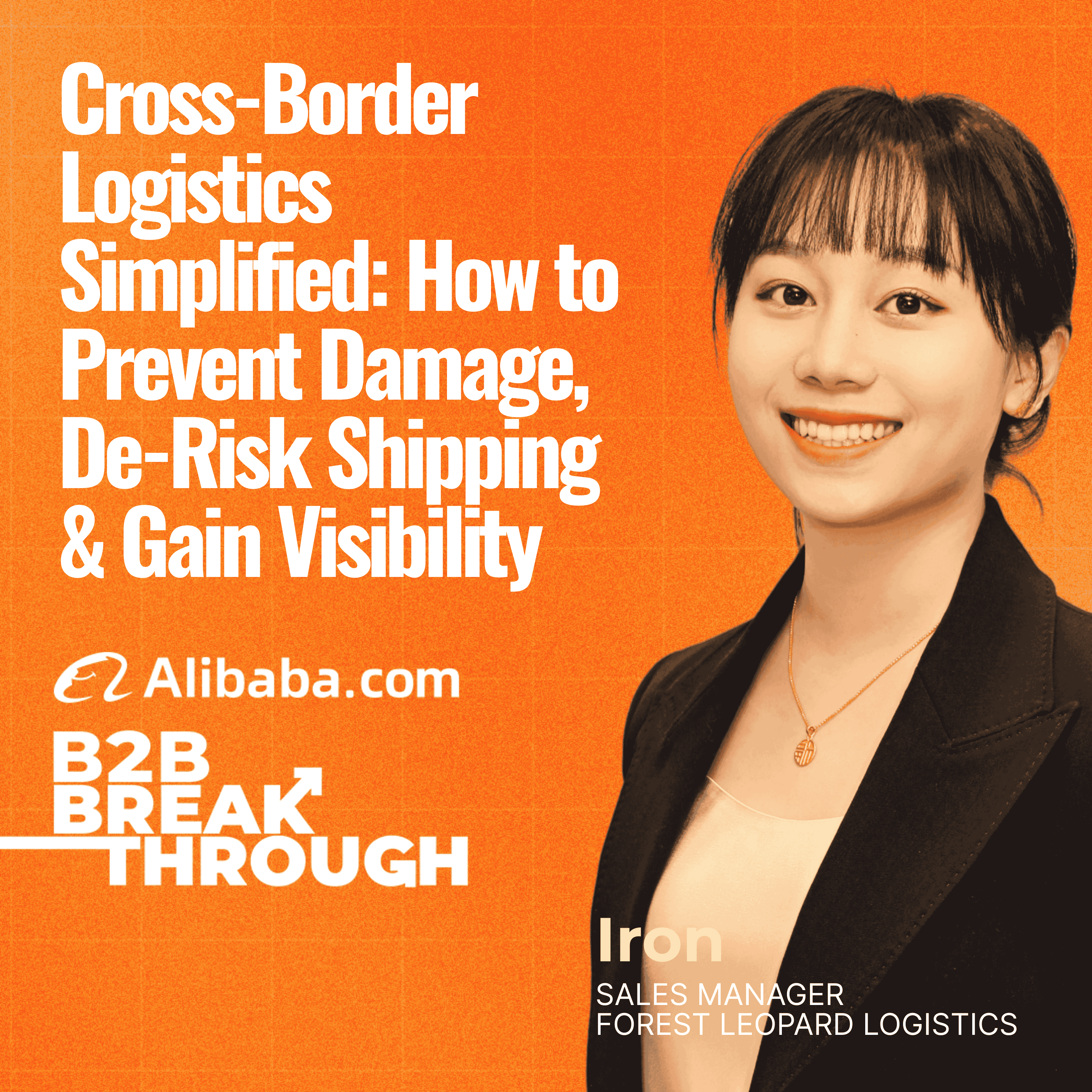
[00:00:00] Speaker A: Here's something most entrepreneurs don't realize. The majority of logistics disasters don't actually start at customs. They start much earlier with packaging decisions you make before your product ever leaves the factory. Today, we're breaking down the most common and costly cross border logistics mistakes and more importantly, how to avoid them. I recently sat down with Ayan from Forest Leopard Logistics, a comprehensive cross border trade partner, and what she shared completely changed how I think about the entire shipping process.
Welcome to the B2B Breakthrough Podcast. I'm your host, Sierra Christo. Let's dive in.
Let's start with something that seems simple but can make or break your entire packaging. When I asked Ayarin about the number one packaging mistake she sees, her answer was immediate. The most common error? Brands using the same packaging for international shipping that they use domestically.
[00:00:53] Speaker B: Many brands keep using the thin and light boxes made for local delivery. But inside a sea container, conditions are tough. Changes in moisture and box stacked high and long trips with shaking can easily cause box to break and products to get wet or items to rob and break.
[00:01:13] Speaker A: Think about that. Your product isn't just riding in on a delivery van for a few hours. It's stacked in a shipping container for weeks, going through temperature swings, moisture and constant movement. Those cute lightweight boxes that work perfectly for domestic shipping. They're a recipe for disaster at sea. Iron shared a concrete example. Her team helped a home goods brand switch to stronger five layer boxes with a waterproof layer. The result? Damage dropped from 18% to under 5%. That's potentially thousands of dollars saved on a single shipment.
Now here's where it gets interesting.
The shipping method you choose should actually influence your packaging strategy, and this can help you balance costs in surprising ways. Air shipping takes 9 to 12 days with less handling, so you can use lighter packaging. Sea shipping, you need packaging that withstands moisture, supports heavy stacking and lasts through weeks of storage. For electronics going by sea, AI' rn recommends desiccant bags, plastic trays and extra padding. Yes, air shipping costs more, but you save on packaging. It's all about understanding the trade offs. Here's what blew my mind though. Iron said the best time to talk to your logistics partner isn't after your product is designed, it's during the design phase.
[00:02:22] Speaker B: Actually, I think the earlier the better, ideally when the product is still being designed. Because we once helped a small device brand change their products inside parts before production to better handle shaking. We also make their shipping box a standard size. They saved them 20% on final delivery costs.
[00:02:44] Speaker A: 20% savings just from Having that conversation early. And here's another example that shows how this all connects. For a ceramics brand, Forest Leopard recommends special paperboard and metal corner guards. The packaging cost went up 10%, but damage fell from 30% to 3% and insurance costs dropped 15%.
So yes, better packaging costs more upfront. But when damage drops by 90% and insurance gets cheaper, good packaging isn't an expense, it's an investment.
So we know packaging matters. But where does damage actually occur? If you're like me, you probably assumed most problems happen in that last mile. Your local delivery driver tossing packages around.
Turns out we've been looking in the wrong place. Iron's company analyzed over 23,000 orders and the results were startling.
[00:03:31] Speaker B: Putting goods into and take them out of the container is the most common. Time for damage is about 40, especially when handed roughly by people. And also shaking during the trip cause about 30% of damage. And poor factory packaging cause about 20%.
[00:03:50] Speaker A: Let me break that down.
40% of damage happens loading and unloading containers. 30% during the voyage, 20% from factory packaging. That last mile delivery, barely a factor. The real battle is getting your product onto the ship and keeping it secure during transit. So how do you protect against this? Forest Leopard checks goods three times before leaving the factory, when arriving at the warehouse and before container loading. During loading, they follow strict rules. Heavy items never on top of light ones. Wooden bases for stability. Airbags filling empty spaces. But here's the game changer. They record everything on video.
[00:04:29] Speaker B: I remember one of our customers used the video we presented showing that goods were actually damaged during unloading by the truck company. Eventually, they successfully claim compensation from the truck company.
[00:04:42] Speaker A: Without that video, endless arguments about responsibility with it, clear proof, successful claim, case closed. And speaking of responsibility, when damage happens, who actually pays? It depends on the stage.
Factory problems are the supplier's fault. Issues during transit belong to the shipping company and final delivery problems fall on the local driver. The key is having digital agreements where each party signs off at their stage. Your logistics partner should manage this for you.
Now, one critical thing Iron emphasized, and this is super important.
You need to be completely transparent about what you're shipping.
Accurately declare materials, quantities and values. Not doing this causes customs headaches and will absolutely kill insurance claims if something goes wrong. Iron's prevention advice is simple. Document everything with photos and videos at each stage. It costs almost nothing, but clearly shows who was responsible. At which point, let's talk about insurance, where a lot of entrepreneurs make expensive assumptions. Here's the My shipping company has insurance, so I'm covered.
Here's the standard shipping insurance only covers catastrophic scenarios, entire containers, lost ship accidents. The compensation limits are shockingly low for common issues like broken items, water damage or delays. They mostly don't pay.
Iron shared an example that made my jaw drop.
[00:06:06] Speaker B: We saw a case where a client's electronics correct, the goods were worth $80,000. But the shipping company only paid $200 for the shipping cost.
[00:06:18] Speaker A: $80,000 of product, $200 in compensation that could sink a small business. So how do you know if you need additional coverage? Iron walked me through a very simple formula. Goods value times chance of damage divided by insurance cost.
If that number is over three, get insurance.
$100,000 in goods with a 5% damage risk means $5,000 in potential losses. If insurance costs $500, your ratio is 10.
Absolutely worth it. And good news. Forest Leopard has a free tool to calculate this for you.
Now. Buying insurance is one thing. Actually getting paid on a claim. That's where things get tricky. Claims get delayed or denied for two main reasons. Missing documentation, no unboxing videos, no third party damage reports or inaccurate information. When buying insurance, not disclosing what your goods really are, understating value or hiding important details. But here's where the right partner makes all the difference. Iron's team helps clients assemble proper documentation. And they've cut the average claim time from 45 days to 14 days. That's getting your money back a full month faster.
She shared another story about wooden furniture that arrived damaged after sitting in an overseas warehouse for two weeks. By reviewing all the video and photo documentation, they pinpointed exactly when the damage occurred, filed the claim and got compensation approved in 10 days. 10 days for an international insurance claim? That's almost unheard of and only possible through documentation and expertise.
We've covered packaging, damage prevention and insurance.
Now let's talk about visibility. How to know where your product actually is.
End to end visibility means tracking your shipment throughout the supply chain. You will be able to see the pickup from the factory, arrival at its port, it being loaded onto a ship, going through customs clearance and finally delivery.
[00:08:10] Speaker B: For stock, you can see what's on the way. You can include the sea shipping time in your restocking plans and keep 20% less backup stock. And for cash flow, you can know exactly when goods will arrive and plan the final payments and sales.
[00:08:28] Speaker A: 20% less inventory sitting in storage, better cash flow planning. And you can share tracking with your buyers so they stop asking where's my order?
But you don't need to obsessively check tracking every five minutes. A recommends watching for three key the ship, leaving late customs problems and failed delivery. The system handles minor updates and only flags points where you need to take action. As Iron put it, it's like following the big trends on a map, not watching your location change every second. What should you expect as a baseline? Updates on key steps within 48 hours and the ability to integrate tracking data with your e commerce partner. That could be Shopify Amazon wherever you sell in 2026. This isn't a luxury, it's standard. Before we wrap, here are four quick, actionable things you can do right now. Check your carton's burst strength, the BST value Don't just look at thickness, make sure it can handle the weight it needs to support. Number two Use airbags to fill empty spaces and containers. Iron Also mentioned foam or inflatable cotton work great. This one step dramatically reduces damage from movement. Number three Be completely honest about what your goods are made of when getting insurance items with batteries, fragile materials, disclose everything up front. Number four Monitor your port to warehouse time change rate. This single metric tells you how reliable your entire logistics chain actually is.
And above all, document everything with photos and videos. This came up again and again in our conversation. It protects you at every stage and speeds up any claims if something goes wrong. As Aaron told me, finding a reliable professional shipping partner can help you avoid a lot of trouble. And after this conversation, I couldn't agree more. You can find Forest Leopard logistics right on Alibaba.com and for B2B Breakthrough listeners, use code PODFL10 when you reach out for 10% off your first shipment. Thanks for tuning in to B2B Breakthrough. Until next time, keep building, keep learning and keep shipping smarter. I'm Sierra Christo and I'll see you in the next episode.
This year, 100 Bold founders took the Co Create stage, pitching their products for a share of a million dollars in prizes. Small Business Spotlight is our way of continuing the conversation, highlighting standout products we believe deserve a little more love. Please welcome to the podcast. Aisha Bird of R and B Dog Bakery. I'm so happy to have you here. I know we had a lot going on at Co Create and just to have a moment to dive deep and chat with you about R and B Dog Bakery. I'd love to start us off with a quick elevator pitch. What is R and B Dog Bakery? And how'd you get?
[00:11:10] Speaker C: Yes, absolutely. So my heart is dear to R and B Dog Bakery. So I founded in 2018 so we have a all natural dog treat company. And what's dear to my heart is our story behind R and B Dog Bakery, which started with the love I had for my dogs Reese and Benjamin, who were the original taste testers and they have now transitioned on.
But I had to find a treat that Benjamin could eat.
I remember his first birthday cake and that's how we started.
He had the worst stomach problems. It took a lot of time in practice, but that's where my ground started for R and B Dog Bakery. And so realizing that there were other families that were looking for those same healthy treats and those dogs that had sensitive stomachs. And so to come eight years later and say that we have been able to grow R and B Dog Bakery has been an amazing journey and I wouldn't change it for the world.
[00:12:23] Speaker A: Can you tell me a little bit about what's driving that necessity? So how long ago did you start this company and how long did it take for you to realize all of these factors were going to be so crucial?
[00:12:37] Speaker C: When did I start my research into making dog treats? Believe it or not, it was 22 years ago.
[00:12:43] Speaker B: Wow.
[00:12:44] Speaker C: And then even fast forward to 2018 when I took that brave step to start R and B Dog Bakery. There was a need for a pet for dogs that needed natural treats. We use a higher grade flour, we use brown rice flour which is way more digestible, especially for dogs that have like allergies or any sensitive stomach. So it's been a long journey on research.
But I will say that out of the eight years that we have been in business, we have been fortunate enough to have five star reviews on Google. We've had repeat customers.
Of course we have those where at this point we've had clients that we started with their first birthday and we've had them where they transition on. That's how long we've been going with value clients.
[00:13:41] Speaker A: So that's such a special story to have with your clientele. How is your business structured? Do you have a brick and mortar store? Is it a brick and mortar bakery or is it packaged products on shelves?
[00:13:53] Speaker C: So we have a brick and mortar in Arlington, Texas right now. We're very excited because we are moving into a brand new location. Location to Mansfield, Texas. And yes, we actually sell on Walmart as well. We also partner with another dog company, accessory store and they're actually in New Jersey as well. We also sell on online, we have our e commerce store and and then we have a couple of other locations in Texas that we partner with. Lucky Pup Grooming, Pixie Paws, Pet palace.
[00:14:29] Speaker A: How do you make sure that you are staying sustainable within your business model in your sourcing practices as you've been building out your products?
[00:14:38] Speaker C: In 2025, I did a rebrand, and it has been the most amazing thing for us. It really has helped to show our community impact, our sustainability model that we have.
And honestly, that's all been possible. Through Alibaba. I share with a lot of my other business owners, and when they say, wow, your packaging is absolutely amazing, where did you order it from? I'm like, I have a source for you, Alibaba. And I, and I.
And, you know, a lot of people are intimidated by not knowing how to search and how and where to go and how to talk to manufacturers as far as sourcing and to be able to share the knowledge that was provided to me over to other business owners to help them has been amazing. So Alibaba has been a huge, huge impact from my sourcing for our packaging for everything through our rebrand.
Even with our new store, we've been very excited to get a lot of our new equipment. One of our initiatives last year is that we went to reusable bags again because we have. We're a People and Planet first certified company. And so our sustainable model is zero waste for our bakery. And when I say zero waste, we have no products that ever go to waste. So either it's donated to the pet food pantry or we actually provide it as samples. A lot of our ingredients are sourced locally through farmers in Texas, like our rosemary parsley, local sourcing, local sourcing for our eggs, for our cake.
[00:16:25] Speaker A: That's huge. And so your. Your relationship with your suppliers has. Has that been consistent? Are they able to help you stay within those. Those parameters for that certification?
[00:16:37] Speaker C: They are. So it was interesting because I wanted to ask how they are recyclable, where they're sourced from, and the manufacturers that I use through Alibow are amazing. We've actually became really good friends.
They when they honestly almost when it's close to time to order and they kind of know my schedule at this point, and they'll reach out to me and they're like, we want to make sure we get your order in. We'll be off making sure that they keep us accountable for any new packaging that we're looking at to make sure it aligns with our people planning for certification and just ensuring that we also highlight what we want on our packaging with our new certifications. We're also a Go Texan certified. We went through a little change to make sure we highlighted that on our packaging so that clients locally in Texas.
[00:17:33] Speaker A: What is something that you would pass along to the next gen of small business owners?
[00:17:38] Speaker C: So the one thing that I would pass along is to find your niche, find something that you are passionate about.
And the reason I say that is because as you're a business owner you are going to have the up and down challenges.
And if you're only doing something just for money, I'm telling you when when you go through that moment where the funds are not coming in and those sales or those sales from services are not coming in, you're going to be ready to quit. And so find something that you are passionate about that also makes a community impact.
[00:18:18] Speaker A: How can folks continue to follow your story and buy R and B Dog Bakery Treats online? Hit us with some links and some.
[00:18:25] Speaker C: Handles so you can follow us on Instagram, Facebook and TikTok bdogbakery.
Our website is www.rbdogbakery.com and you can again follow us. You can shop our products. You can also find our products on Walmart as well.
[00:18:48] Speaker A: Stay tuned and follow along the story of R and B Dog Bakery. B2B Breakthrough is produced by Alibaba.com to find out how Alibaba.com is empowering its customers with the tools, services and resources they need to grow their business, visit Alibaba.com and then make sure to search for B2B Breakthrough on Spotify, Apple Podcasts or wherever you find your podcasts. Make sure to follow us so you don't miss future episodes. On behalf of the team
[email protected] thanks for listening.