[00:00:00] Speaker A: When building the brand, I really sat down and mapped out the vision, the mission, and put it into different pillars. My north stars, if you will, but the foundation, so that every decision will be made upon these. And that as I grow and hire employees, they'll know exactly what we're rooted in.
[00:00:19] Speaker B: Welcome to the B2B Breakthrough Podcast. We're here to bring you all the.
[00:00:22] Speaker C: Best knowledge, insights and strategies from e commerce experts, successful business owners, and the.
[00:00:27] Speaker B:
[email protected] that you'll need to grow your business and achieve your next big breakthrough. I'm your host, Ciara Christo.
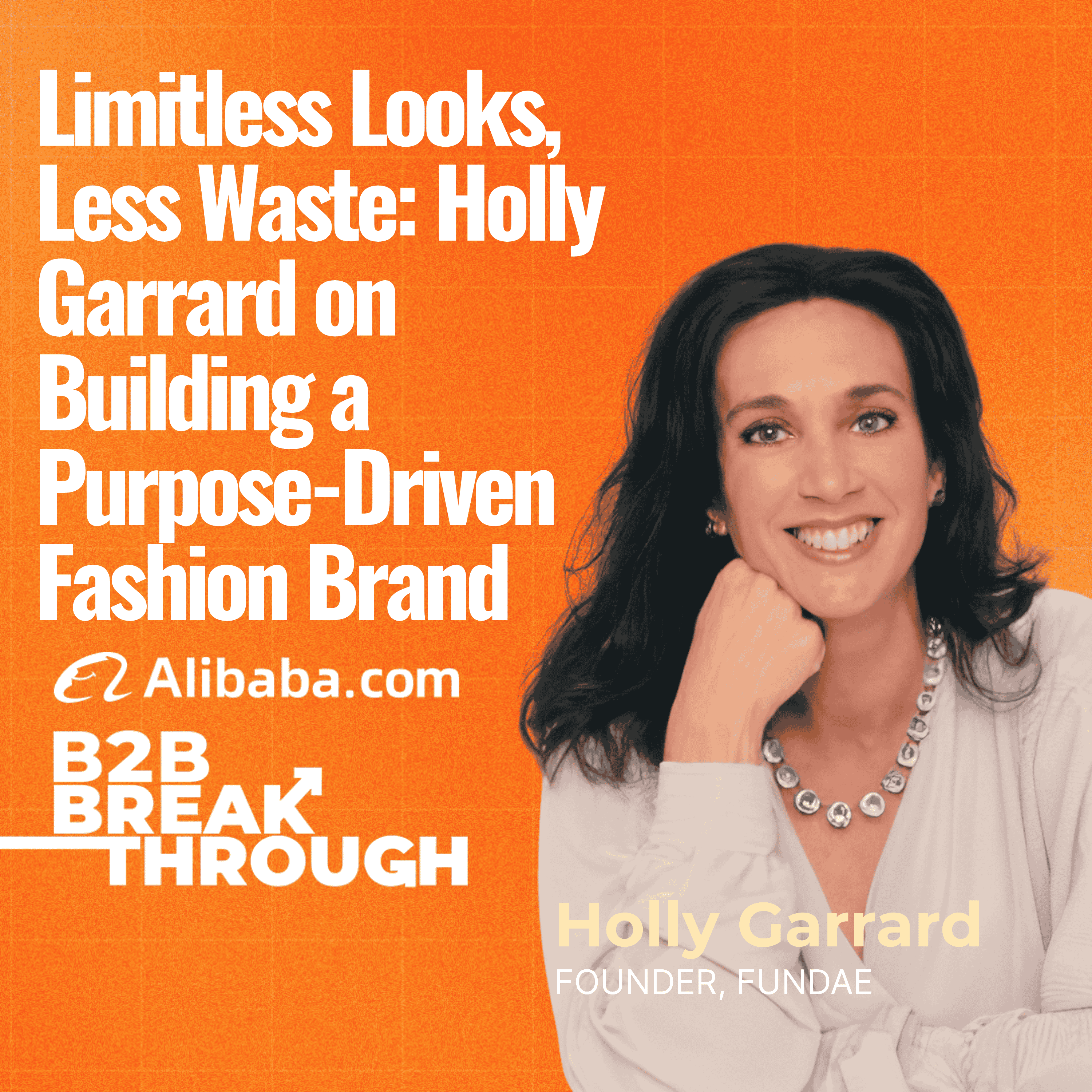
[00:00:36] Speaker C: Today we're joined by Holly Girard, founder.
[00:00:38] Speaker B: And chief visionary officer of Funday, the eco chic footwear brand redefining fashion through sustainability, innovation and purpose. With a patent pending modular shoe system that lets you restyle your look in seconds, Holly is proving that style and sustainability can walk the same Runway, all while uplifting women and the planet. Holly, welcome to the show.
[00:00:58] Speaker A: Thank you. Nice to be here.
[00:01:00] Speaker B: It's so nice to have you here. So you joined us for Co Create this year, which was super fun. You joined us on a. On a panel with Entrepreneista, is that right?
[00:01:08] Speaker A: That's right. I sure did. It was an honor to be at Co Create surrounded by a bunch of other people pouring their heart into their dreams and making it a reality. And Entrepreneista is there to help us every step of the way. They're cheering us on, they're helping us get platforms like yourself. So the reason I was at Co Create with you was because of Entrepreneista. So I'm really grateful for the camaraderie and mentorship.
[00:01:32] Speaker B: Oh, that's so cool to hear. We love working with them and we love the brands that find us through them. So it was such an honor to have you on that panel talking about making a global splash as a female founded brand.
[00:01:44] Speaker A: Thank you.
[00:01:46] Speaker B: Yeah, it's such an empowering topic to chat through, and that representation is crucial. So tell me a little bit about Funday, because, you know, we got a little glimpse of it in the panel, but I want to dig deep.
[00:01:57] Speaker A: Sure.
[00:01:58] Speaker B: Can you lay a little foundation for us on what Funday is?
[00:02:01] Speaker A: So I've always been a shoe lover, hands down, known for my shoes, known for color.
And I really believe that your personal brand and any career that you have is important to convey who you are, your confidence. When I was a child, I used to basically sell my mom her own shoes. I'd line them up in the hallway and And I always played with shoes. So to my family it's really funny, they're like, what took you so long?
But I was a responsible person and had a corporate job in media for many years. And so when I would travel, it's like if I check a suitcase, I could maybe miss a meeting, but carry on doesn't allow me to bring enough shoes and I won't wear the same shoe more than once. So I always had this lingering thought, if only there was a shoe that could do more for me, if I could restyle it somehow and travel lighter. Also buying less, right? More conscious consumption. So the seed of the idea was really there from a lover of shoes. And what the market research was telling us was brands really have to have a purpose mission and that sustainability was on the rise. And as I dove deeper into the sustainability and started really analyzing what brands are using, what materials, what sourcing, I really was eye open to the lack of sustainable materials in fashion and especially within footwear. And the only thing in the market was casual wear or you know, sports or utilitarian.
And quite frankly it was boring and beige and it was a csa. And I'm like, that's the gap. That's the huge gap. There's nobody doing full color stylish sustainability. And so I'm on a mission to showcase that you really can be stylish and colorful and sustainable at the same time.
[00:03:47] Speaker B: I think sustainability is such a kind of a catch all term. We talk about it in terms of shipping practices versus materials that you're using versus multipurpose. And I think you find this common ground to tie all of it in really nicely. You mentioned sustainability is on the rise and that's what kind of helped you come to this conclusion that this is the right path. What was that experience like? Like what was the impetus that told you? Yeah, 100% sustainability is a cornerstone of this business?
[00:04:17] Speaker A: Well, I think a few factors. So on a personal level, I grew up in California, I grew up on the beach. California was also ahead of the time. And as far as being more eco conscious and saving energy. And then I guess just diving into the research, it really proved that not everyone else was thinking that way, not everyone else was making decisions on that.
And the research was showing that the younger generation, they will be making decisions on it and they are starting to. And then if the products aren't there and they're not available or the products aren't serving what you want, like let's say stylish, they're not going to make a decision solely based on that. So it took a little bit of something that I love and then also the analytics to really prove the case.
[00:05:01] Speaker B: Yeah, well. And what you've ended up with is something that really does speak to people. I think the, the sustainability barrier for consumers is often this feeling of like, I don't want to look like I'm sustainable. Right.
[00:05:14] Speaker A: That's. So that's exactly what it is. It's like, okay, I'm from California and I'm actually probably embody a lot of quote unquote hippie. This is such a stereotype. Right? There is a look, there's a stigma to it, and there shouldn't be. It's like, we all brush our teeth, right? We should all be sustainable. There are things that are just absolutes in this world, and the products and the brands need to make it that accessible for all of us so that we're not locked into a bucket. That has been defined.
[00:05:43] Speaker B: Right. Well, and, you know, broadening the. The playing field so that there is, you know, there's a time and place for, for a Birkenstock, you know.
[00:05:51] Speaker A: Yes. For some. Yeah.
I mean, I might make mine sparkle or something. And all due respect to that, to that brand, but you do make a statement of, like, what our personalities are as well. Right. But like you just said, maybe people who want to be sustainable don't want to be in that lane. So how can we be both? And that's what Fundays is providing. You can be sustainable and stylish at the same time. So it was a matter of, okay, I'd love to save the planet, I'd love to save the earth. I'd love to figure out a way that I can contribute in some way and create a product that others can join me and contribute. But it's probably going to be in a red stiletto, as it should be. I love that.
That's my superhero cave. It's a bunch of red stilettos and incredible hot pink, every color.
[00:06:36] Speaker B: And I think, you know, your background in media, having this, this corporate foundation is really helpful in knowing that business people and folks going to conferences and wherever you find yourself, you know, you want to have those options to be a little bit more conscious about your purchasing power and what it stands for.
How has your community engagement and conversations been with. With your consumers, you know, in that respect? Have you. Is that really the, the audience that you're speaking to?
[00:07:07] Speaker A: It's such a good question. And it's so varied because there are so many facets to the brand of Funday. And if we take a step back just to share a little bit about what fun day is. So fun day, like ice cream sundae with the E at the end is a nod to the food connotation. Right. I want people thinking of the ingredients, and I want people having fun. I want sprinkling joy and positivity around everywhere we go. So fun day. You pick your cone, which is your heel. You pick your flavor. What color makes you feel your most confident, confident, bold, encouraging people to show up in full color in their full light. And then for us, our literal cherry on top is our magnetic magic where we can re shoe and restyle that particular shoe. So to your point of the question with the community, so the materials themselves are also there, are very sustainable, and I know we'll get into that in a little bit with sourcing and materials. The product itself is also inherently inside sustainable in that you can consume less. So you can invest in one shoe, and then it has limitless look. So you're changing the magnet, you're mixing the accessories. And so with that investment of for yourself and for a quality product, you're buying less and getting more so you can keep up with fashion and trends without supporting fast fashion.
[00:08:30] Speaker B: It kind of brings me back to this age of, like the charm bracelet or like the Pandora bracelet, where, you know, it was that, you know, you could swap out your holiday charms. And I'm. I'm feeling like very 2003 right now. But I'm retro.
[00:08:45] Speaker A: I get that.
[00:08:47] Speaker B: Yeah, it's like that. That feeling like, you know, you. You don't need to especially.
[00:08:52] Speaker A: I'm.
[00:08:53] Speaker B: I'm speaking as someone with a. With a small New York City apartment. I don't have the space for 3,000 pairs of shoes.
[00:08:58] Speaker A: That's exactly right. When you asked what my targets were, that's a perfect example. I'd love to buy these 10 shoes, the bows and things. But the reality is I can buy one.
Now you buy one, and you have a box of toppings, and so just like your box of chocolates right now, you can fit it into your closet. Right. And so there's the traveler, there's the New York City, or any urban dweller. So there's so many different targets and conversations that we have with our consumers that, you know, it just depends on where they are in life. But it's really designed to fit every occasion, your mood, and every season. You change out the pillows, you change out the dish towels, and it's like, why can't I do that with my shoes? So it's interesting. That same connotation of the charm bracelet or interior design has been a big part of my inspiration.
[00:09:49] Speaker B: That's really cool. Yeah, that. That ability to. To celebrate, you know, the moment.
[00:09:54] Speaker A: Yes.
[00:09:55] Speaker B: Without having to commit to, you know, a Christmas closet, you know, whatever.
[00:10:00] Speaker C: Whatever.
[00:10:00] Speaker A: Right. You don't have to buy a red plaid shoe. You can buy a red plaid bow, and then you put it on your black shoe and call it a day. And then you put a black shiny or silver for New Year's, and no one knows it's the same shoe.
[00:10:14] Speaker B: Amazing.
So you've got, like, this, the. The interchangeability as part of your sustainability model. And then you mentioned that there's, you know, sustainable practices in the. The material source as well. Can you talk to me a little bit about how you made this decision to pursue a more sustainable material as your foundation?
[00:10:34] Speaker A: Yes, absolutely. I think that was really the impetus to starting the brand. Like I mentioned, it was the market research told me that there were better materials out there and that people are making their decision, yet I couldn't find one that I could purchase. There really weren't a lot of brands that were doing it. And so I started dabbling in curiosity in the research of materials. I think, you know, I had to do a lot of homework before I felt confident that I could make this giant leap and launch a company. And so I started with the materials, and I found an amazing wealth of fabrics. So primarily what I am using is corn, wine, grape skins, and cork. I also dabbled with pineapples. I'm looking into banana leaves and agave right now. I know there's apple leathers and mushroom as well. But the current line is we use the corn, the cork, and the wine grapes. So I use it so much, in fact, that the core corn is also all of my lining. So if you buy a shoe where the outside is made of cork and it's lined with corn, and our soles are 100% recycled and recyclable. So as I grow, I'll build the infrastructure to take them back and remelt them into new shoes. And I was literally in a bin in Italy sourcing, and I wanted a silver spoon shoe sole, so to be with the ice cream thing. So it's all silver. Plus, I love silver. I'm in a bin, and it's like, recycled automotive parts. It's such a cool story. It's like, oh, my gosh, I'm walking on, like, recycled Maserati, and I can go faster and further. Like, it's super, super cool. But it's also very, very sustainable.
So that particular shoe is 98% eco friendly, I call it between the mix of recycled and then from a plant based standpoint, it is 76% plant based, which is really unheard of in the marketplace. So there are some corns and some of the colors tend to, you know, may vary where it's whether it's 55% corn or 75%. But my linings are all 75% corn. And then the other 25% is a water based adhesive, lower chemical and there is a 5% of a recycled polyurethane in there because it is really hard from the binding mechanism. They haven't solved that yet. But overall, if you think about my lining as corn, it's breathable, it's plant based.
So there are so many brands out there that are claiming to be vegan and while they're not an animal product, and I feel like PETA won that argument. And we all know I love animals, but they're actually petroleum based and they're not plant based, they're not really vegetable, which is what vegan would mean. Right. And so there's greenwashing and how is a consumer supposed to know? And so my hope is that people start to read the ingredients. So again, why I named it Fun Day, I want people thinking of the ingredients, digging, remaining curious and looking at it. So we disclose all of that to the consumer.
[00:13:37] Speaker B: Wow. How has the response been to that? Because there's a certain amount of education, responsibility on your plate with this.
It's not one that is necessarily super intuitive to the fashion industry and the consumer mindset. When we're talking about clothing, we've gotten really diligent about reading our ingredients in the grocery store. How are you educating your audience on, on actually doing that research and to consider that in their practices. What, what's that conversation looks like It's.
[00:14:09] Speaker A: A, it's a really good point. So when I was working in media and marketing, I was at an agency at one point and was creating an app for some, for some brands and on the rise was the disclosure of ingredients on the label. We knew that the food ingredients were really important and so people adopted that. And Europe's actually always ahead of. And so they set out these standards. So I knew it was going to come for fashion. So it went from food to beauty. And then so the consumer is like, well, wait, I absorbed the lotion into my skin. And so there was a natural inclination for people to start thinking and remaining curious of That I do believe it will translate into fashion. It's not quite there yet. And so I do think the responsibility and the onus is on the brands for us to inspire that curiosity and that education and transparency.
Since I started started building this knowing and hoping that it would, the guidelines would, would show up. They are. So Europe is putting guidelines into their fashion. London has announced with their fashion shows, unless you adhere to their sustainable standards, you can't even participate. No matter what your brand is, you can only showcase certain products. So I'm proud to say that all of my products, every single one of them, would meet all of these different standards. And so right now I have to tell people about that because you're right. No one's asking and no one's looking. And so that's why podcasts like this are super helpful to educate. So there's a lot of hope and information on the horizon.
[00:15:39] Speaker B: Yeah, well, and it is becoming a conversation. People do have access to more information than they did, you know, even five and 10 years ago. So it's. People are a little bit more receptive to the education portion of it. But there's also a lot of intuition that comes into play. Is this a trusted source? How am I vetting the information?
And part of that challenge is what you mentioned just a minute ago, this greenwashing that we're seeing across so many businesses. As someone who has done the research extensively, how can you identify whether a brand is greenwashing or not? What does that look like?
[00:16:20] Speaker A: It's such a really good question.
And it's hard right now. Like the truth is, it's really, really hard because there aren't standards, there isn't a regulation, so anyone can say anything. So as a consumer, I would advise really looking into it. I think when you go on different websites, so up and coming brands like myself, it will be really clear in the founder story and, you know, they'll talk more about it. They're on a mission. I think there are some apps like Good on you that has certain ratings, there are certain listings or some sustainable marketplaces, but less people are going to those or those people are already stylish, are already into sustainability. So I do think that there will be more requirements in the future. There are definitely going to be more tech companies that are going to help make it really, really easy through apps and different technology to have the consumer have information at their fingertips.
[00:17:17] Speaker B: That's great. Those are some really helpful resources. So I hope folks who are listening are checking out apps like that and really grasping this because there's so much depth to this conversation, and this is a helpful entry point for folks especially. There's something a little bit novel about the conversation that you and I are having and talking about these materials. I didn't know shoes could be made out of corn or grape skins. That's a compelling argument, and I hope that it. It helps to encourage folks to. To dig into it.
[00:17:50] Speaker A: Yeah, I do. I do think the wow factor has been the most exciting, that people are like, oh, that's cool. Wait, what? Wait, why? Wait, how? Right. And so I'm starting to share more videos on, you know, the pressing of the grapes and all the. All the different sourcing and really. And really telling the story. So one of my factories, in fact, they had all this garbage that. All the scraps. So I also. Most of my toppings come from dead stock, which means, you know, this person bought a thousand, but these 200 are going in the garbage. Right? They're just going to go to a landfill. Right. So I take dead stock or scraps and turn it into treasure, into my toppings. So I'm like, hey, can I get your fat, your. Your scraps? And he's like, yes, because I paid $10,000 to get that removed.
So they're getting fined, so they're starting to think through and do things differently over there.
But the whole life cycle story, in addition to just my product, but how that material got to there is going to eventually be told and more accessible, and partners like Serifi are making that happen.
[00:18:51] Speaker B: That's incredible. And I mean, what a serendipitous meeting of the minds here to find a supplier and a partner who has other material, who's producing other products that can be useful to you and you find treasure in the trunk, so to speak.
[00:19:09] Speaker A: I know.
[00:19:10] Speaker B: How did you find this partner? You know, talk to me a little bit about, you know, that's. That's probably the most daunting task when you're starting a business is to figure out, where am I getting this, how am I making it? So what was that vetting process like with. With your suppliers and manufacturers in Italy?
[00:19:27] Speaker A: I knew I wanted the plant based. Right. I knew I wanted the materials, so I actually sourced all of the materials and then went to a factory and asked them to make it where most people would start. Like, the factory usually sources everything. So if you're going to make a thousand shoes, they're buying the materials. Exactly. For a thousand shoes. And my model was very different because my whole point was, pick your cone, pick your Flavor. So my flavor is going to go across all the different cones. So I wasn't looking at it as this particular skew needs this particular material. So I was very cognizantly choosing the different flavors that I wanted that had the good, solid, sustainable ingredients.
Then my eyes were open because I was not from the fashion industry. So working with the factory was a whole new novel experience. And they don't like to work that way. And so it was very, very hard. I did a bunch of cold calling trying to get factories to work with me. I chose Italy for their craftsmanship and their artistry. However, they're known for leathers. So I would contact people and ask them if they would work with me in my plant based leathers. They're like, no, but we have this other leather if you want to work with us. I started getting people to work with me and so I actually did some homework on recycled leathers.
So recycled leathers are actually much better for the environment than vegan petroleum based leathers. So the plastic baked leathers, they're terrible for the environment. They live there forever. They cause microplastics into the ocean, where recycled leathers is preventing it from going into a landfill. Most people that are using recycled leathers are also part of a sustainable practice. So they use low chemicals, less water. And so when I learned that, I started picking up a few new flavors and recycling leathers, which opened the door to get some of these factories to work with me. They're like, okay, she's gonna use some left. So some of it's like, you know, a little bit of a give and take. But as long as I did my homework and was it was still adhering to my brand standards, I was okay with that. But it was very, very difficult to get particular factories to work with me. And I had to start with some small ones and get a couple prototypes. And they weren't good enough. So but what it did allow me to do was get an actual prototype. So then when I went to bigger, larger factories, they took me more seriously. Cause when I contacted them the first time, they were not willing to work with me. Cause I had zero experience. Wow. So it took many, many years of give and take. Small factory, small batch, go to the next one that I felt could do the job and scale with me.
[00:21:56] Speaker B: When did you start? When was that? When did you kick that off?
[00:21:59] Speaker A: In 2020, New Year's Eve, 2020. It's like, what do I want to do this decade? I think I'll make a New Year's resolution. I'M going to leave corporate. Like, where do I want to be in five?
It wasn't what I was doing.
And I knew my kids. I'm a single mom raising my girls, and I knew that they would be out of the house within a few years. So it's like, what do I want to do? How would I marry my passions? Right? And so I, after all that research that I spoke about, I decided to commit to it. And so I did some cold calling, found some factories to work with, and wrote a check in January 2020 to a small place in Italy. And then in February, they called me, emailed me, and I'm like, I'm not reading this translation right, but they just told me they're closed for a month or two. And I'm like, wow, I either got ripped off or I'm translating that wrong. But it was Covid, right? Oh, my God, who knew? So Italy was second.
And so at that time, it really hadn't hit America until March to the levels that we knew about, right? So it was unfathomable. I'm like, you're closed for a couple months. Like, that's weird, right? I'm like, I got ripped off.
So basically nothing happened that year.
I can tell you when I wrote that first check, going, I'm going to do this. And interest rates were super low, right? I had a corporate job, I had a savings. You could travel, and then all of a sudden, like, no travel, supply chain gone, Interest rates through the roof. So the journey changed. It was very challenging.
[00:23:26] Speaker B: I believe it.
[00:23:27] Speaker A: God.
[00:23:28] Speaker B: Okay, so as you've been working with these suppliers, how has your inventory management works? You know, is it, is it it, you know, made to order? Are we working in big batches? And, and how has that conversation with your suppliers gone? How is that relationship built?
[00:23:44] Speaker A: I think that is one of the most difficult aspects of the business is getting the partners to embrace the vision and do. And do things differently. I definitely had to participate in their minimums and, and, and work with the way that they work as well, and then kind of evolve into this hybrid. So, so for now, the inventory, I bought full batches of inventory, so everything you see online is in existence. And so I do hope to get to a little bit more of a pre, pre order where you can pick your actual cone and flavor. If I don't already have it paired together, I did try to pair across multiple combinations so that everyone has a chance of their favorite flavor and their favorite cone. That said, so everything the inventory I have in existence right now and Then working towards that hybrid model with the different factories.
Have a couple factories now in place and it took me a while to get there, to be honest. It was. Most of the factories were too small at first. Some of them were just old fashioned, right? It's Italy stuck in their way, bunch of old guys. It's funny, but it speaks to a real issue in, in traditional Italian factories. But the young generation, they don't want hands on, they want digital. So even the factories themselves are having a hard time staffing. And so there are higher prices for that artistry and the craftsmanship to incent new younger generations to be there.
But for now, I have some good factories. I have some solid relationships that we can grow together. We know each other now. We know a little bit how we work. They've adopted. They didn't like my soles at first. They insisted. Leather, leather, leather. I'm like, no, it's, it's, it's rubber.
So my soles are as durable and waterproof as a rainbow. They're flexible. Flexible and super comfortable, which is unheard of in high heels. And so I just shaved it really, really thin. And so now they like working with it because it's the same height as the other and they can last it. So I had to make, you know, modifications to work with them, but I'm pleased with the results.
[00:25:45] Speaker B: So were you the one imposing, you know, an instruction on, you know, what materials to use for which piece then? Or, you know, I know we. Or is that more collaborative to get.
[00:25:55] Speaker A: I did every single component and I was adamant and I got pushed back on every single component. I can't tell you the number of meetings that I had where it was just me and a bunch of Italian men and they would talk for 40 minutes and I'm like, what? No, no, not possible. No. I'm like, wait, you. What did they say? Why? You know, you tell me. You're talking forever. No. And next door. Next. Next one. And so they all wanted to use their same, you know, the same stuff, but I sourced absolutely everything. And so I know what it is and why. And there's a purpose and an intent for sustainable intention for every single piece.
[00:26:34] Speaker B: That's so impressive. That's tenacity right there.
[00:26:37] Speaker A: Thank you.
[00:26:37] Speaker B: It can be difficult to break through. For your voice to cut through there and to reach that point where you've articulated your vision and you found the right people who are willing to listen and commit to the vision that you've instilled is really commendable. So I want to Give you your flowers on that one.
[00:26:57] Speaker A: Thank you so much. I appreciate it.
[00:27:00] Speaker C: Is the complexity of sourcing holding you back? Are you getting overwhelmed by information in an endless search now? Sourcing for your business has never been easier. Meet Axio, the world's first AI sourcing engine that helps you source like a pro with five key features. You'll get product inspiration that leverages real time market data from comprehensive web insights, social media trends and B2B knowledge. Generate detailed requirements to find the perfect match from AI verified products and suppliers through Axio's multimodal search. Use supercomparison to easily discover and compare millions of products from leading suppliers, focusing on the best selling and most competitive options. With Axio page, you'll get AI generated encyclopedia pages that compile verified product information for each sku. And finally leverage Axio agent to streamline negotiations with conversation guidance, real time summaries and direct answers about products and suppliers without having to browse detail pages. Head over to Accio AI today. That's Accio AI to try Axio for free and start sourcing like a pro.
[00:28:05] Speaker B: It is so purpose driven, everything you've built here. And so I want to talk a little bit more about that purpose. I think the sustainability element is really, you know, that may be the most intuitive purpose you know behind your brand, but you stand for so much more than that. There is so much more built into the ethos here and I think it's a credit to your marketing background, it's a credit to your baseline value system and it's really touching. So if you just want to give us a little foundation of the purpose behind Funday.
[00:28:35] Speaker A: When building the brand, I really sat down and mapped out the vision, the mission and put it into different pillars. My north stars, if you will, but the foundation so that every decision will be made upon these and that as I grow and hire employees, they'll know exactly what we're rooted in. So for alliteration, because I love it, they're P's. So preservation is my sustainability purpose is my giving back which we'll speak to. Personalization is really empowering women, empowering you and individuality to be your own self. Then there's also P for like places. So it's going around the world and sourcing locally and regionally. Playfulness in that we are sprinkling joy and fun and then positivity can speak to the magnets and it speaks to just being kindness. I want people to be more positive. So the brand is intentionally designed to lift you up. It's Like a nostalgic candy store. Right. It's like a whimsical, positive vibe when we get really deep into what the purpose is for the first three main pillars. So that preservation is that sustainability that you spoke about. So that's my farm to foot that is sourcing as best we can, what's in the earth and who the hand harvesters are. So it's really that farm to foot. Then there's purpose is healing and healing. So that's where we get to give back. So we're providing heals. So every purchase that a consumer makes, I give a percentage back to charities that are doing the good work for healing victims of domestic violence or human trafficking. And really I felt that the shoes were the most poetic and empathetic way to walk in someone else's shoes. And so it's really helping women get back on their feet. And for me, that stems from a bit of a personal journey. So I went through a divorce years ago and raised the kids all by myself. And I had a great job and I was able to survive and buy the house and give the kids the lifestyle that they were accustomed to. And I was very proud to do that. And at the same time, it was awful and painful and terrible, yet I was fine. And so I could not stop thinking about other women who did not have the means that I had. How were they fine? How are they surviving? And so it really stuck with me. And it's like, how can I give back? I could volunteer. And I really just kept having a calling and it's like, do something bigger, do something greater and use the skills that you have in marketing and color and style and create something that exponentially can give more by donations. So that's our healing. And healing. So that's, that's truly our purpose. Wow. Yeah. The others are important ingredients that bring it all together and that tied with the bow, with the personalization, the cherry on top. But we're healing and healing.
[00:31:30] Speaker B: That's beautiful. I think it's.
[00:31:32] Speaker A: Thank you.
[00:31:33] Speaker B: I, you know, I was just speaking with Dion, you know, who was on the panel with you.
[00:31:37] Speaker A: Listen to that.
[00:31:37] Speaker B: Yeah.
And she, you know, she talked about how having purpose, having, you know, a community of women and founders who are also committed to their own charities, their own causes, is so important to having the being surrounded by like minded people. And I think yours is so, is so laser focused. It's so clear and it's got such a nice tie into the brand itself, the product itself. How has that continued to grow and how has that informed some of the choices you've made with funding day over the years.
[00:32:16] Speaker A: Thank you so much. I really appreciate that because I. I have poured my heart and soul and souls into this and I hope that people feel that. I hope that people know that and I hope that that authenticity remains.
And that is why I was very clear and intentional in defining that, because I don't want to veer from that. So every decision I've made in the sourcing and the materials is checked by that, like, truly preservation is the best. Is this the best and most sustainable available on the marketplace? Right now I'm working on adhesives. I wish there were more, you know, less chemical based ones. So I hope to continue to grow with what's available on the market. I'd love to be able to help inspire and push the envelope for people to make those components.
And so much of what I was doing was building, like I said, so it. Most of my time was spent there, even though I could not wait to get to the marketing, go to market strategy and do the give back. So I really see that as my focus now. Right. Like being able to open the doors and do more in person. Like, what else can we do for charities, for fundraising, getting community involved together. And I'm open to other charities, so I'm hoping to roll out, featuring some different females that have maybe gone through some things. So maybe like a female of the month, A fun day where we're highlighting whether it's a single mom or I know some people who've gone through some other hardships. Right. Like what could we do to rally around, to uplift women together and give back to maybe your charity at that time? I think there's so much we can do with products. I do think it's a brand's responsibility to be mindful to our communities and to really make a difference in a positive footprint together.
[00:33:59] Speaker B: That's beautiful.
[00:34:00] Speaker A: Thank you.
[00:34:01] Speaker B: What has that research looked like around the women that you're serving as a brand? I think this is so, like I said, it's laser focused. It's so tied into. This is my audience and these are some of the challenges that they're facing and I want to be a champion for them. So as you talk to these women, or even if it's not a face to face conversation, what kind of audience research have you done to identify that? This is an audience that needs this product, an audience that needs a platform. Where has that inspiration come from?
[00:34:32] Speaker A: Oh, gosh, yeah. There's definitely more experts in the space than myself. For sure. And so I do lean to the organizations that are doing good work for domestic violence and human trafficking.
So I learn a lot through their statistics.
I remember when I had that idea. Right. And then I launched and then Covid happened and ironically and sadly, domestic violence went through the roof. Right. If you can imagine, people are locked in the house and everyone was annoyed. And so I think it's important to remind people that aren't going through it to think about that. And there is a lot of research that shows it's. It's the same as, sadly, anything like one, we all know someone who knows, you know, few degrees away that someone who's gone through something like this. So I think the people that are buying my shoes, it resonates with them because they know their cousin or their sister or their aunt or someone else has gone through something similar, and so they can empathize in a realistic way and support a product that's giving back. And then we need to be participating in the community events to really see it and get to know the real. The real issues.
[00:35:44] Speaker B: Yeah. Wow. I mean, thank you for doing that research. Thank you for giving back.
It's, it's. It really is, you know, so much more motivating to, to, you know, have that brand loyalty with a brand that has, that's committed to similar values or, or even if they're not values or causes that are like, top of mind for you in your lived experience.
[00:36:07] Speaker A: Yeah. If you don't have a connection to it. I hope that most of us are empathetic enough to realize that this is important and that there's a brand that's doing something better than just profit. Right. And so I think people do appreciate it. I think one of the biggest challenges is I have so many nuggets. Right. I have sustainability, I have purpose is conveying the different points at one time. Right. So that concise and clarity is actually very difficult in a single message. I mean, we've been talking for a while now, right?
[00:36:38] Speaker B: Yeah, exactly, exactly.
[00:36:39] Speaker A: I'm hoping that as people get familiar with the brand, they're taking away something new each time. So I really think through that as I'm working through my marketing and my social content, you know, there are certain things that are just fashion forward, like my fashion Runway walks. It's amazing and it has to be beautiful. We have to meet people where they are, when they want style. And even though my foundation of purpose driven and sustainability is why I'm doing this, and it's rooted in that and oh, by the way, it has to be beautiful or no one's going to buy it. Maybe people come because it's gorgeous and stylish, learn all the other wonderful attributes about it and then that's the epiphany of like, oh my gosh. So I'm hoping for that wow factor after. So maybe some people find me because of sustainability. But even if they just came because they love shoes, I really hope they take away with a lot more.
[00:37:29] Speaker B: Yeah, it's a slow burn unfolding over time and I think that's really, really incredible.
[00:37:36] Speaker A: Thank you.
[00:37:37] Speaker B: I love that brand story and that's.
[00:37:39] Speaker A: Why I stick through. Like I said, it took me a really, really long time. Yeah, I believe in it. I believe in what we're doing and I know I can make a difference. I know I can give back. And so I'm sticking with it.
[00:37:50] Speaker B: I love it. And so are you, are you a one woman operation?
[00:37:54] Speaker A: I am. I'm a solopreneur, like legit. It's hard, not gonna lie. And that's why wonderful vendors like yourselves and Entrepreneista group and I'm in a handful of female network groups. And luckily, I guess one thing that came out of COVID that could be positive. I'm sure there were multiple things that came out, but one of the positives is that gig economy. Right. So a lot of people are like, I don't ever want to go back to a 9 to 5 in an office where I don't like things. So I have been able to find some really talented people that I can hire one offs for projects without huge salaries. So the these transactional or project based, you know, partnerships have been such a gift because it allows me to financially find good talent, serve its purpose. Maybe it's web design, maybe it's this, maybe it's that. But, but that's also challenging because I'm a solopreneur and you know, they're not, they're not always there. So you don't. If they're not your employee, you can't rely on them for everything. Right. So it's been a journey, I bet.
[00:38:54] Speaker B: Well, and it'll continue to grow and unfold as, as the brand does. And more people will refer folks back to you and I hope so.
I'm so confident that that's how that will, that will unfold.
[00:39:05] Speaker A: Thank you. Yeah, absolutely. And that reminds me, I do want to offer to your listeners so breakthrough20 so on funday.com they can get a discount. So if anyone was inspired by listening to this, they will get their discount and I will still give the percentage back and we can all hopefully make a difference together.
[00:39:27] Speaker B: Oh, that's so kind of you. Thank you so much. All right, so let's recap. You know, funday.com use code breakthrough for a discount at Funday. That's amazing.
[00:39:37] Speaker A: Yeah, thank you so much.
[00:39:39] Speaker B: I want to, you know, wrap up here talking a little bit about what the future looks like for Funday. So, you know, what, what does growth look like for you in the next, you know, you can keep it, keep it small scale next year or so. I know it's, you know, you're only five years in and it's amazing the growth that you've experienced to date.
So talk to me about what's next.
[00:40:01] Speaker A: So I'm, I'm looking at wholesale, so I, I'm a D2C brand. Right. I am, however, in two retail stores. I'm in a Soho store and a Paris store. So it's called flying solo, both in New York and in Paris. They're my retail partner. They support independent designers. So it's a consignment type of retail model. So it's not a whole. A true wholesale. So it's like you kind of walk into, you know, baby steps, right? I feel like I've learned so much more in that space and with shoes. So apparently I did not know this. Naivety is bliss. Shoes are the most difficult thing in all of fashion. So there's multiple components, there's multiple size runs and people like in person, so they want to touch and feel that. So I've been doing a lot of trunk shows, I've been exploring more retail partners and pop up ups. So I find a lot of value and in the in person. And then it's really the wow factor. They're like, wait, this shoe does. Wait, it's this shoe. And I put this bow, and I get this bow, and I get this bow where I played around my website. So I'm still evolving the user experience on the website, but it has, the website user experience hasn't compared to the wow factor in person. So my growth, I anticipate I'm in some conversations with some wholesalers, praying, hoping that I get into some good channel shops.
[00:41:20] Speaker B: That's really exciting. Well, congratulations.
You know, what's, what's already been achieved and what's on the horizon. Sounds like there's a lot of really exciting revelations to come with fun day.
[00:41:32] Speaker A: Let's hope your lips to God's ears. I'm ready.
[00:41:36] Speaker B: I believe I have faith.
[00:41:37] Speaker A: I'm so excited for you. Thank you.
Thank you. And I think that's the importance of doing the homework. And I would say to anyone who's thinking about doing a dream and following a dream, you just stay true. It takes. It's going to take a lot longer than you thought. It's going to cost you a lot more money than you thought. And if you believe you can do it, you can just. You can just take steps every day to get there. And so that's what I've been doing, is just pouring my heart and soul into it. Build, build, build. And. And I know something good will come.
[00:42:04] Speaker B: I love that. Well, you know, you've. You've definitely put in the hard work, and I'm so excited to see where it goes from here.
[00:42:11] Speaker A: Thank you. I appreciate it so much.
[00:42:14] Speaker B: Oh, my pleasure. So where can folks find you? Can you hit us with some links, some handles?
[00:42:19] Speaker A: Sure, absolutely. So, Funday.com and that's with an E F U N D A e dot com. Like ice cream sundae. My socials are Funday soles.
[00:42:29] Speaker B: S O L E S.
All right, so that's Instagram.
[00:42:32] Speaker A: Yeah, Instagram, Facebook, TikTok, all of it.
[00:42:35] Speaker B: That's great. All right, so we'll drop those links in the show notes. So follow Funday, follow. Holly, thank you so much for being with me today. This was such a fun conversation.
[00:42:45] Speaker A: Absolutely. I loved it. Great to see you. Great to talk with you.
[00:42:48] Speaker B: Likewise. Thanks, Holly.
[00:42:50] Speaker C: B2B Breakthrough is produced by Alibaba.com to find out how Alibaba.com is empowering its.
[00:42:56] Speaker B: Customers with the tools, services, and resources.
[00:42:58] Speaker C: They need to grow their business. Visit Alibaba.com and then make sure to search for B2B Breakthrough on Spotify, Apple Podcasts, or wherever you find your podcasts. Make sure to follow us so you.
[00:43:08] Speaker B: Don'T miss future episodes.
[00:43:10] Speaker C: On behalf of the team
[email protected] thanks for listening.